Sunday, September 9, 2012

The Art of Browsing

The New York Times Magazine article from 20 July "Pinterest, Tumblr and the Trouble With ‘Curation’" makes me feel like someone just dissected and psychoanalised my favourite little pet past-time, which is exactly what they did.  I feel vulnerable and a little put-off.  The article discusses websites, tumblrs, blogs, and Pinterest and the internet theme of presenting images next to one another on a website without many words.  I go to plenty of websites like this, my favourites being The Sartorialist, Garance Dore (she has more words), Pinterest, Jak and Jil and occasionally Musings in Femininity (tumblr), The Glitter Guide, and A Well Travelled Woman (tumblr).  The article asks the question: Why do I (and millions of others like me) love these websites?  Frankly, I'd rather they leave us alone to our nice little diversions.

Is Pinterest and blogging (the type of blogging that I normally do, posting pictures of things that I think are pretty or interesting) curation?  Curation meaning, by my definition, carefully selecting things in order to create a message or impact when they are all together.  The article seems to say, 'Maybe but probably not.': "
“Curation” does imply something far more deliberate than these inspiration blogs, whose very point is to put the viewer into an aesthetic reverie unencumbered by thought or analysis. These sites are not meant (as curation is) to make us more conscious, but less so. "  
It's true.  When I see each picture, I have a jolt of creative input (which feels good and stimulating) and I judge it (which feels like I am accomplishing something, putting the universe in order).  I also want to make for myself a personal "catalogue of curiosities" (hence the motto for this blog) so that I can go back and find the things that were pleasing to me in order to connect them to other ideas or to act upon them in some way.  She continues...

"That might be O.K., but it also means they have a lot more in common with advertising than they do with curation. After all, advertising trains us to keep our desire always at the ready, nurturing that feeling that something is missing, then redirecting it toward a tangible product. In the end, all that pent-up yearning needs a place to go, and now it has that place online. But products are no longer the point. The feeling is the point. And now we can create that feeling for ourselves, then pass it around like a photo album of the life we think we were meant to have but don’t, the people we think we should be but aren’t."
I feel very pinned to the wall with this one.  It reminds me of some notes I took at a youth group weekend away.  The speaker said something about training our "wanters" to want things that are good things (Christ) not bad things (pride/sin).  It seems as though our wanters are so highly stimulated that when we are not being pelted with advertising we seek out similar stimulation elsewhere.  It's like being a child who is given candy for good behaviour and then goes on to be a candy connoisseur and candy collector and opens up a factory to create and sell candy when the point the whole time was to encourage good behaviour.  Or something.

J just came in a read my thoughts so far and said that I shouldn't be so put out by all of this.  All of us walk around with holes in our hearts that look to everything to tell us who we were meant to be and what lives we were meant to have.  Pinterest, et al. are just one manifestation of where we look to have our hearts filled.  But to look at our Creator and to know and see that He made us who we are and loves us is the only completion that we can have.  Having that knowledge and love at the centre of our hearts lets Pinterest and everything else fall in to their appropriate place: diversion.

Friday, September 7, 2012

Space.

I am interested in volunteering for a youth work organisation in Northwest London called Space.  I found out about the organisation through a series of connections and I have a meeting with the head next Friday.  I can't wait.

As a foretaste of our meeting, the head sent me an article that was written about the org in Youthwork Magazine: "Coffee with Rebecca Hamer".  It's so awesome.

Here are a few bits from the article and the things that they remind me of:
  • "Often as a youth worker I have found that I have had to check my motivations. Do I want to give an answer to her because I have a need to help her, or because I genuinely want to help her? "
This is something that I've been thinking about for awhile, ever since I wrote [this post] after talking with a guy from my church who is doing his Masters in Counselling thesis on what motivates people in helping professions to do their jobs.  Even a quick skim of Emotionally Healthy Spirituality the other day refreshed the idea in my mind.  In it, Peter Scazzero goes through his genogram and highlights his family structure that explains why he needed to help people.  However, as the guy at my church said, none of our motivations will be 100% selfless.  We are fallen people.  We should seek to be aware of our motivations and seek accountability for them.  Or something.
  • "Rebecca explained that the young person is, ‘having to find the solution themselves. They have to problem solve. And once you have problem solved once, you can possibly do it again."
This reminds me of an article that my sister in law posted on Facebook a few months ago: "UVA research: Arguing kids could have benefits"  which is all about how kids who are able to argue with their parents and develop logical reasoning for why they will or will not do things have a greater chance of resisting negative peer pressure.  The process of talking aloud trains teens to be able to think through issues wisely.  This is what the Space project wants to provide!

  • "We take this small group through eight weeks of thinking about how their thoughts and feelings are connected: why we end up in the same situations, what’s driving our thinking. It gently gives them the space - when they’re ready - to start to challenge some of their strongly held negative beliefs about themselves. "
This is basically the counselling that I've been (semi) trained in at seminary.  Rock on.

  • "This person feels that they aren’t worth anything. So let’s stay with that, let’s acknowledge it - saying, “That must be really hard – how does that feel?” Let’s stay there with them in it. I love Henry Nouwen’s book The Life of the Beloved. He talks about befriending our pain. I love that. He says the key to our healing lies in our pain. So if we can befriend the pain of our young people, then maybe we can help them to find the keys to their own healing. "
Magical!  Henri Nouwen!  Yay!  Yes, it is so important to be with young people in their pain and let them feel the legitimacy of it.  One of my favourite quotes is by Carl Jung: "Neurosis is always a substitute for legitimate suffering."  Instead of running away from our pain and the pain in this world, to see it, face it, let Jesus heal it!  But running away from it or covering up the pain just buries it so that it continues to fester and create more problems.

  • "We also need to remember that we are not counsellors. The listening deals with the present – but if it becomes always about the past, then we have to be signposting young people to counselling. All of this edges towards therapeutic youth work so we need to be very clear about boundaries. Youth work is a beautiful role because it stands between teacher, counsellor, pastor, friend, sister – but we have to be extra careful about knowing what our role is.’"
Very good and healthy.  We can't pretend to be something that we're not trained to be.

  • "‘We are motivated by a Christian faith and operate within that framework but don’t impose the beliefs of that framework on the young people we work with. The story that inspires me, as an example of something being faith-based but not faith-biased, is the story of the healing of the ten lepers. Jesus heals the ten lepers, they all go their separate ways, and then one comes back and says: “You are the Son of God”. Only then do they have a conversation about who Jesus is. The heart of The SPACE Project is to offer healing to any young person of any background."
Very good.  Beautiful.

I can't wait for the meeting and hopefully the opportunity to get involved with the Space project!

Thursday, August 23, 2012

Blossom Dearie


Just discovered this spunky singer from the 50s on spotify!  This cover could easily be an indie album cover from today.

Wednesday, July 18, 2012

George Bellows

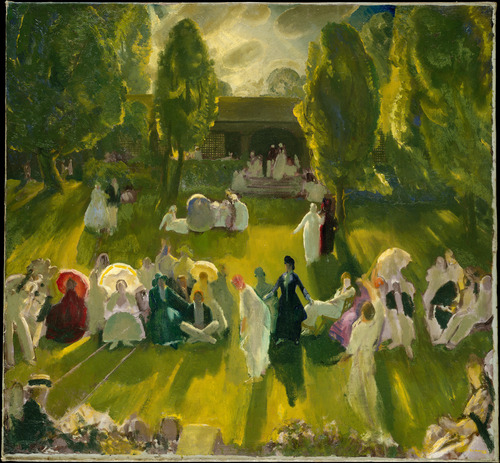
My brother and his family are taking their vacation in Washington, D.C., this summer and went in (for exactly 8 minutes before it closed) to see the George Bellows exhibit at the National Gallery of Art.  I have never heard of George Bellows but took a quick look online while skyping with them and was blown away:
"Both Members of This Club"

"Cliff Dwellers"

"Tennis at Newport"

Wednesday, June 6, 2012

Milan Men's Street Fashion

"I love how Milanese gentlemen move like they are the star of their own film.
Such swagger. Such intrigue.
This isn’t about fashion or even style but about creating an impact on the viewer.
A visual seduction."
- The Sartorialist (link)


Credit for all photos to the decidedly good-looking J. Willcox.  Shot in and around the Piazza del Duomo and Galleria Vittorio Emanuele II, Milan.

Wednesday, May 9, 2012

Isambard Kingdom Brunel

Besides having an epic name, this architect from the mid-1800s made himself quite famous in London and beyond.

The first work of his that I saw in Ealing was the very large and impressive Wharncliffe Viaduct, which is still used today as a bridge for trains.

(source)

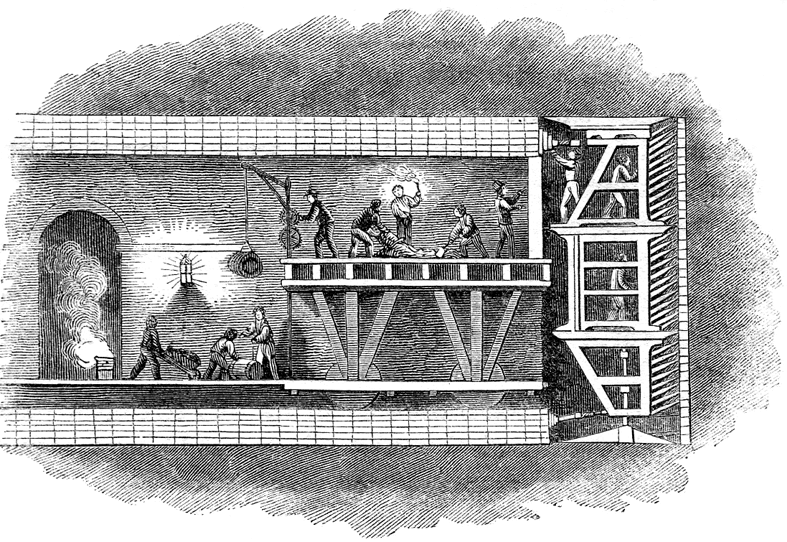
Brunel also worked under his Dad, Marc Isambard Brunel, in the beginning of his career and both worked on the Thames Tunnel which was, according to the Brunel Museum, the first tunnel under a navigable river.  The tunnel now forms part of the London Overground train system.  In 1828 there was an accident and the tunnel flooded, killing six men, and Brunel himself narrowly escaped drowning.  He recuperated in Bristol, where he heard about the Clifton Suspension Bridge competition.

(source)
The Clifton Suspension Bridge in Bristol.  
(source)
The Royal Albert Bridge between Plymouth and Saltash.
(source)
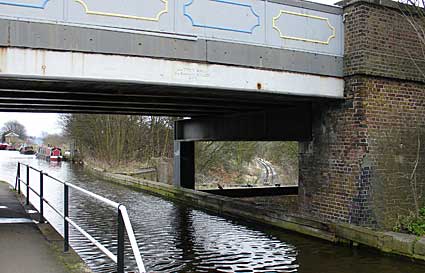
And finally, my favourite, the work of Brunel that is closest to my house: "Three Bridges" or "Windmill Bridge."  It's incredible.  The lower level is rail, the middle is the canal, and on top is Windmill Lane.  Three levels!

(source)
I would love to now go and see the Brunel Museum in Southwark.  Maybe I can drag some people to go with me?