“Appreciative love gazes and holds its breath and is silent, rejoices that such a wonder should exist even if not for him, will not be wholly dejected by losing her, would rather have it so than never to have seen her at all.”
― C.S. Lewis, The Four Loves
Tuesday, January 15, 2013

Wednesday, December 5, 2012
Life
"God created this draw toward relationship. The draw is toward himself, and we are told to look for his presence: "Seek the Lord while he may be found" (Isaiah 55:6). It is in relationship with God that we find ultimate connection and meaning. And by God's design, the draw is also toward others: "Two are better than one" (Ecclesiastes 4:9). We are at our best when we are connected deeply to God and to the people who matter most. That, along with a meaningful purpose and task, creates the best life possible."
Beyond Boundaries by John Townsend
Beyond Boundaries by John Townsend
Tuesday, November 27, 2012
Burning the ships
Hello loyal reader(s),
You might have noticed on the side bar that the archive of blogs has increased ten-fold. This is because martadouglass.blogspot.com is becoming no more. Thanks to Google's creed of "Don't Be Evil" (and Jono's knowledge) I transferred all of my blog posts from martadouglass onto this very blog. There's some amazing stuff in the back logs. Enjoy!
M
You might have noticed on the side bar that the archive of blogs has increased ten-fold. This is because martadouglass.blogspot.com is becoming no more. Thanks to Google's creed of "Don't Be Evil" (and Jono's knowledge) I transferred all of my blog posts from martadouglass onto this very blog. There's some amazing stuff in the back logs. Enjoy!
M
Thursday, November 8, 2012
Failure, part 2
So I got my hands on a free Kindle sample of the book, Mindset, so here are more quotes and thoughts:
"In this [growth] mindset, the hand you're dealt is just the starting point for development. This growth mindset is based on the belief that your basic qualities are things you can cultivate through your efforts."
"You can see how the belief that cherished qualities can be developed creates a passion for learning. Why waste time proving over and over how great you are, when you could be getting better?"
"Instead, as you begin to understand the fixed and growth mindsets, you will see exactly how one thing leads to another - how a belief that your qualities are carved in stone leads to a host of thoughts and actions, and how a belief that your qualities can be cultivated leads to a host of different thoughts and actions, taking you down an entirely different road."
"If, like those with the growth mindset, you believe you can develop yourself, then you're open to accurate information about your current abilities, even if it's unflattering."
This is from a Malcolm Gladwell article, "The Talent Myth": "Dweck gave a class of preadolescent students a test filled with challenging problems. After they were finished, one group was praised for its effort and another group was praised for its intelligence. Those praised for their intelligence were reluctant to tackle difficult tasks, and their performance on subsequent tests soon began to suffer."
"In this [growth] mindset, the hand you're dealt is just the starting point for development. This growth mindset is based on the belief that your basic qualities are things you can cultivate through your efforts."
"You can see how the belief that cherished qualities can be developed creates a passion for learning. Why waste time proving over and over how great you are, when you could be getting better?"
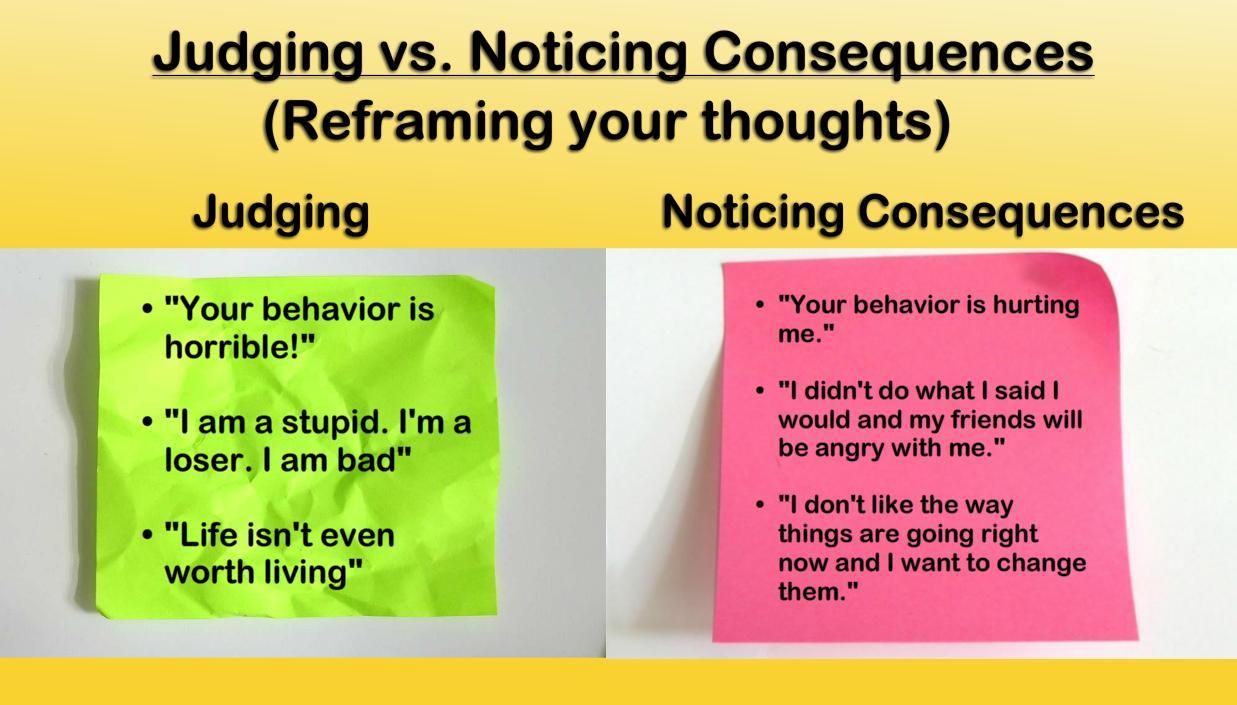 |
| from Pinterest |
- One thing is that to feel the inner safety and security that allows a person to take risks. Risks can become too risky if there is not an inner sense of stability to fall back on.
- However, spending too long navel-gazing and making sure that all is safe and secure internally will not allow for risks and challenges to be taken.
- A person can only have a "growth mindset" if they have a secure emotional base.
"Instead, as you begin to understand the fixed and growth mindsets, you will see exactly how one thing leads to another - how a belief that your qualities are carved in stone leads to a host of thoughts and actions, and how a belief that your qualities can be cultivated leads to a host of different thoughts and actions, taking you down an entirely different road."
"If, like those with the growth mindset, you believe you can develop yourself, then you're open to accurate information about your current abilities, even if it's unflattering."
This is from a Malcolm Gladwell article, "The Talent Myth": "Dweck gave a class of preadolescent students a test filled with challenging problems. After they were finished, one group was praised for its effort and another group was praised for its intelligence. Those praised for their intelligence were reluctant to tackle difficult tasks, and their performance on subsequent tests soon began to suffer."
Self-Esteem
Article that is blowing my mind:
New York Magazine, "How Not to Talk to Your Kids" by Po Bronson. 11 Feb 2007
"Since the 1969 publication of The Psychology of Self-Esteem, in which Nathaniel Branden opined that self-esteem was the single most important facet of a person, the belief that one must do whatever he can to achieve positive self-esteem has become a movement with broad societal effects. Anything potentially damaging to kids’ self-esteem was axed. Competitions were frowned upon. Soccer coaches stopped counting goals and handed out trophies to everyone. Teachers threw out their red pencils. Criticism was replaced with ubiquitous, even undeserved, praise.
[Carol] Dweck and Blackwell’s work is part of a larger academic challenge to one of the self-esteem movement’s key tenets: that praise, self-esteem, and performance rise and fall together. From 1970 to 2000, there were over 15,000 scholarly articles written on self-esteem and its relationship to everything—from sex to career advancement. But results were often contradictory or inconclusive. So in 2003 the Association for Psychological Science asked Dr. Roy Baumeister, then a leading proponent of self-esteem, to review this literature. His team concluded that self-esteem was polluted with flawed science. Only 200 of those 15,000 studies met their rigorous standards.
After reviewing those 200 studies, Baumeister concluded that having high self-esteem didn’t improve grades or career achievement. It didn’t even reduce alcohol usage. And it especially did not lower violence of any sort. (Highly aggressive, violent people happen to think very highly of themselves, debunking the theory that people are aggressive to make up for low self-esteem.) At the time, Baumeister was quoted as saying that his findings were “the biggest disappointment of my career.”
Now he’s on Dweck’s side of the argument, and his work is going in a similar direction: He will soon publish an article showing that for college students on the verge of failing in class, esteem-building praise causes their grades to sink further. Baumeister has come to believe the continued appeal of self-esteem is largely tied to parents’ pride in their children’s achievements: It’s so strong that “when they praise their kids, it’s not that far from praising themselves.”
By and large, the literature on praise shows that it can be effective—a positive, motivating force. In one study, University of Notre Dame researchers tested praise’s efficacy on a losing college hockey team. The experiment worked: The team got into the playoffs. But all praise is not equal—and, as Dweck demonstrated, the effects of praise can vary significantly depending on the praise given. To be effective, researchers have found, praise needs to be specific. (The hockey players were specifically complimented on the number of times they checked an opponent.)
...
Sincerity of praise is also crucial. Just as we can sniff out the true meaning of a backhanded compliment or a disingenuous apology, children, too, scrutinize praise for hidden agendas. Only young children—under the age of 7—take praise at face value: Older children are just as suspicious of it as adults.
...In the opinion of cognitive scientist Daniel T. Willingham, a teacher who praises a child may be unwittingly sending the message that the student reached the limit of his innate ability, while a teacher who criticizes a pupil conveys the message that he can improve his performance even further.
New York Magazine, "How Not to Talk to Your Kids" by Po Bronson. 11 Feb 2007
"Since the 1969 publication of The Psychology of Self-Esteem, in which Nathaniel Branden opined that self-esteem was the single most important facet of a person, the belief that one must do whatever he can to achieve positive self-esteem has become a movement with broad societal effects. Anything potentially damaging to kids’ self-esteem was axed. Competitions were frowned upon. Soccer coaches stopped counting goals and handed out trophies to everyone. Teachers threw out their red pencils. Criticism was replaced with ubiquitous, even undeserved, praise.
[Carol] Dweck and Blackwell’s work is part of a larger academic challenge to one of the self-esteem movement’s key tenets: that praise, self-esteem, and performance rise and fall together. From 1970 to 2000, there were over 15,000 scholarly articles written on self-esteem and its relationship to everything—from sex to career advancement. But results were often contradictory or inconclusive. So in 2003 the Association for Psychological Science asked Dr. Roy Baumeister, then a leading proponent of self-esteem, to review this literature. His team concluded that self-esteem was polluted with flawed science. Only 200 of those 15,000 studies met their rigorous standards.
After reviewing those 200 studies, Baumeister concluded that having high self-esteem didn’t improve grades or career achievement. It didn’t even reduce alcohol usage. And it especially did not lower violence of any sort. (Highly aggressive, violent people happen to think very highly of themselves, debunking the theory that people are aggressive to make up for low self-esteem.) At the time, Baumeister was quoted as saying that his findings were “the biggest disappointment of my career.”
Now he’s on Dweck’s side of the argument, and his work is going in a similar direction: He will soon publish an article showing that for college students on the verge of failing in class, esteem-building praise causes their grades to sink further. Baumeister has come to believe the continued appeal of self-esteem is largely tied to parents’ pride in their children’s achievements: It’s so strong that “when they praise their kids, it’s not that far from praising themselves.”
By and large, the literature on praise shows that it can be effective—a positive, motivating force. In one study, University of Notre Dame researchers tested praise’s efficacy on a losing college hockey team. The experiment worked: The team got into the playoffs. But all praise is not equal—and, as Dweck demonstrated, the effects of praise can vary significantly depending on the praise given. To be effective, researchers have found, praise needs to be specific. (The hockey players were specifically complimented on the number of times they checked an opponent.)
...
Sincerity of praise is also crucial. Just as we can sniff out the true meaning of a backhanded compliment or a disingenuous apology, children, too, scrutinize praise for hidden agendas. Only young children—under the age of 7—take praise at face value: Older children are just as suspicious of it as adults.
...In the opinion of cognitive scientist Daniel T. Willingham, a teacher who praises a child may be unwittingly sending the message that the student reached the limit of his innate ability, while a teacher who criticizes a pupil conveys the message that he can improve his performance even further.
...
Students turn to cheating because they haven’t developed a strategy for handling failure. The problem is compounded when a parent ignores a child’s failures and insists he’ll do better next time. Michigan scholar Jennifer Crocker studies this exact scenario and explains that the child may come to believe failure is something so terrible, the family can’t acknowledge its existence. A child deprived of the opportunity to discuss mistakes can’t learn from them.
...
Truth be told, while my son was getting along fine under the new praise regime, it was I who was suffering. It turns out that I was the real praise junkie in the family. Praising him for just a particular skill or task felt like I left other parts of him ignored and unappreciated. I recognized that praising him with the universal “You’re great—I’m proud of you” was a way I expressed unconditional love."Wednesday, November 7, 2012

Thursday, September 27, 2012
Failure
Finally! I have been searching and searching for this ever since I heard a segment on NPR last summer on how your attitude toward failure effects everything. The book is called Mindset: How you can fulfil your potential by Stanford psychologist Carol Dweck. I'm so pleased.
This concepts from this book have come up again and again in my work at the alternative education centre for young people who have been excluded from their normal schools. Art class at the centre has been particularly interesting in terms of the concept of failure. Art is a pretty risky activity (I've also been meaning to read the book Art and Fear). There are not clear guidelines for success or failure and a lot of art comes from creativity and individuality from inside the artist. What this means is that there is vulnerability and no clear guideline for success. This can be anxiety-producing for the kids.
Also, I'm wanting to get involved with a project that helps girls with their self-esteem. Are there any links between perceived failure and self-esteem?
So here it goes, taking apart the excerpt from Mindset on NPR (here):
This concepts from this book have come up again and again in my work at the alternative education centre for young people who have been excluded from their normal schools. Art class at the centre has been particularly interesting in terms of the concept of failure. Art is a pretty risky activity (I've also been meaning to read the book Art and Fear). There are not clear guidelines for success or failure and a lot of art comes from creativity and individuality from inside the artist. What this means is that there is vulnerability and no clear guideline for success. This can be anxiety-producing for the kids.
Also, I'm wanting to get involved with a project that helps girls with their self-esteem. Are there any links between perceived failure and self-esteem?
So here it goes, taking apart the excerpt from Mindset on NPR (here):
"What are the consequences of thinking that your intelligence or personality is something you can develop, as opposed to something that is a fixed, deep-seated trait?"This reminds me of what a friend of mine, Rebecca, did with the Twilight books. She noticed that a lot of teens were reading them and so picked them up and loved them. As a home-schooling mom, she took the opportunity to create a curriculum that used the Twilight books to teach about how we can make choices to behave in different ways than our natures dictate. In the books, she loved how Edward was a vampire but used self control to become something different and better. She also loved how Jacob was a shape-shifting wolf thing and made choices throughout the book that went against his nature. We are not determined!
"Robert Sternberg, the present-day guru of intelligence, writes that the major factor in whether people achieve expertise “is not some fixed prior ability, but purposeful engagement.”"How interesting! I hope to help kids become more curious individuals.
"Some of us are trained in this mindset from an early age. Even as a child, I was focused on being smart, but the fixed mindset was really stamped in by Mrs. Wilson, my sixth-grade teacher. Unlike Alfred Binet [developer of the IQ test], she believed that people’s IQ scores told the whole story of who they were. We were seated around the room in IQ order, and only the highest-IQ students could be trusted to carry the flag, clap the erasers, or take a note to the principal. Aside from the daily stomachaches she provoked with her judgmental stance, she was creating a mindset in which everyone in the class had one consuming goal—look smart, don’t look dumb. Who cared about or enjoyed learning when our whole being was at stake every time she gave us a test or called on us in class?"How awful!
"Do people with this mindset believe that anyone can be anything, that anyone with proper motivation or education can become Einstein or Beethoven? No, but they believe that a person’s true potential is unknown (and unknowable); that it’s impossible to foresee what can be accomplished with years of passion, toil, and training."
"You can see how the belief that cherished qualities can be developed creates a passion for learning. Why waste time proving over and over how great you are, when you could be getting better? Why hide deficiencies instead of overcoming them? Why look for friends or partners who will just shore up your self-esteem instead of ones who will also challenge you to grow? And why seek out the tried and true, instead of experiences that will stretch you? The passion for stretching yourself and sticking to it, even (or especially) when it’s not going well, is the hallmark of the growth mindset. This is the mindset that allows people to thrive during some of the most challenging times in their lives."I believe that the growth mindset comes from a place of being unconditionally loved. I would love to read the rest of the book and see if Dweck agrees with this or not. For me, learning about and experiencing relational intimacy and finding out about differentiation were all very helpful for feeling secure enough to take risks.
"In other words, risk and effort are two things that might reveal your inadequacies and show that you were not up to the task. In fact, it’s startling to see the degree to which people with the fixed mindset do not believe in effort."
Subscribe to:
Posts (Atom)